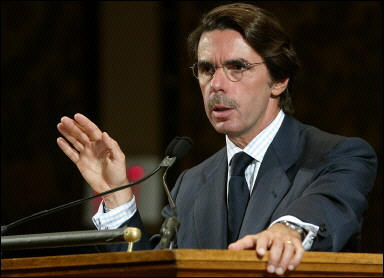
Lecture by José María Aznar
Georgetown University, 21st September 2004
I am an optimist. I do believe terrorism can be defeated. In 95 ETA ordered my murder, fortunately, I survived this car bomb attack. And though I have seen many friends from my own party, the Popular Party (and other non-nationalist parties), fall under the bombs and bullets of the Basque nationalist terrorists, I fought them with all the instruments a democracy has, and I have seen them shrinking, and becoming progressively weaker. Believe me, I know what Im talking about. And thats precisely what makes me more confident an optimistic. Victory is possible over our enemies.
In 79 the King of Morocco was planning an official visit to the US. When asked by a journalist about his intentions, he answered: Im going to teach them a History lesson. Please, dont worry. I am not here to give you a lecture on history. King Asma trip was cancelled and I dont want my stay here among you to be cancelled so soon. What I would like to do today is to share with you a few ideas I have developed through the years fighting against terrorism. Im not a futurologist, but I can assure you, by direct or indirect involvement, I know a few things about terror, how to fight it, and above all, how to defeat it. There are only seven points:
1.- Firstly, victory is possible if we understand, above of all, what we are up against. This is the classical maxim of the great Chinese thinker, Sunt Zu: know thy enemy.
It is understandable and human not to want to see problems that exist. However, it is also irresponsible and dangerous when what we are dealing with represents the worst threat to freedom today. I believe the Bi-Partisan Commission on the tragics events of September 11th has played an extraordinary role in clearly defining the terrorism which, up until that dark day, we had been euphemistically calling terrorism of global reach, international terrorism or mega-terrorism. All ambiguity has been removed as to what we must do, in our capacity as democratic societies, to combat our main enemy: the Islamic terrorism. Nothing more and nothing less. Are there any other forms of terrorism? Of course. When I voluntarily retried from government, half a a year ago, I left ETA prostrate, but not finished; and there are armed groups sowing terror throughout half the world, stretching from Colombia to the Philippines.
The great difference between all these groups and Islamic terrorism is that the latter does not seek to win power or supplant us in government; its ambitions are to destroy our societies per se and eliminate our governments and ways of life at the same time. What is more, its ideology is not content with expelling the infidels from its holy realms (that is to say, Saudi Arabia or the Gulf). The establishment of its Caliphate involves enslaving us all, in all respects.
Bin Laden share a common characteristic with Adolf Hitler: he writes and says what he intends to do. And his vision and plans are crystal clear. He talks about the land of Islam stretching from Al-Andalus (the name the Muslims used many centuries ago to refer to Spain) to the Philippines. He talks about a kind of government inspired by a literal reading of the Quran. He wants his religion to rule our lives. And if or when we can not be ruled or converted, we must be deadly punished and eradicated. Some say Islam is a tolerant faith. But not Bin Ladens Islam, thats for sure.
2.- Secondly, in order to achieve our victory we must accept and understand that we are at War. Obviously, not a conventional or traditional War, but a new form of conflict. A war that we never looked for, but a War that has fallen upon us just because of the implacable logic of our enemy. Bin Laden declared War on us, on democratic, prosperous, free and basically secular Western society. And he declared a total War where, according to his view, there is neither room for negotiations or peace agreements.
When faced with an enemy in total war, one that is relentless and shows no mercy, appeasing its multiple manifestations is not feasible. It is simply not an option. Many people in Spain and Europe believe that the atrocities of 11th March occurred because we supported intervention to defeat Saddam Hussein in Iraq. In their opinion, the significance of the most serious terrorist attack in our entire history can be reduced to the level of a simple punishment for walking hand-in-hand with the United States in its policy towards Iraq. In this respect, the removal of the international Coalition is interpreted as a means of returning to normality and peace. If Iraq was the cause, then us leaving Iraq would mean that the terrorists would have no reason to attack us again. This argument is as simple as it is mistaken.
This is because, to begin with, as we learned later on, the atrocities of 11th March in Madrid began to be plotted back in October 2001 (two thousand and one), long before the campaign in Iraq was initiated or even prepared. However, there is more. If you take the trouble to focus on what Bin Laden has written and stated in recent years - and let me point out again that Bin Laden writes about what he aims to do with striking clarity - you will realize that the problem Spain has with Al Qaeda and Islamic terrorism did not begin with the Iraq Crisis. In fact, it has nothing to do with government decisions. You must go back no less than 1,300 (one thousand three hundred) years, to the early 8th century, when a Spain recently invaded by the Moors refused to become just another piece in the Islamic world and began a long battle to recover its identity. This Reconquista process was very long, lasting some 800 years.
However, it ended successfully. There are many radical Muslims who continue to recall that defeat, many more than any rational Western mind might suspect. Osama Bin Laden is one of them. His first statement after 11th September - I repeat, the 11th September - did not begin by referring to New York or Iraq. His first words were to lament the loss of Al Andalus - Moorish Medieval Spain - and compare it to the occupation of Jerusalem by the Israelis.
I know that it may sound like an exaggeration, accustomed as we are to very much shorter horizons and political cycles that last four, or at the most, eight years in total. However, there are his texts and proclamations. Bin Laden is dealing with time-scales and cycles that are very different from our own, and his perspective guarantees an enormous sense of patience. And what is even worse when it comes to fighting him, he has a capacity for endurance that is worthy of being taken into account.
We are not in an optional war, a war of our own choosing. Its terms have not been defined so far by ourselves, but by our enemy. In this respect, it is essential to spread the message that there is no possible form of escape, and that hiding one's head in the ground or pursing individualistic and unsupportive policies are options that will inevitably lead to disaster. We are all in the same boat, although it is true that some, such as America, are especially targeted for what the country is, the world's greatest power and possibly the only nation capable of defeating terror on its own. Eliminating Islamic terrorism will be to the benefit of all and especially those who are most threatened by it.
3.- Thirdly, the fact that we are in an all-out war - them or us - means that we must pursue an active policy, one that seeks to ensure a victory, rather than simply cobbling together a provisional solution to the problem. In other words, a policy of containment, which was applied to the former USSR, is not viable. Whether good or bad, Moscow accepted the game of spheres of influence, whilst the geo-strategic frontiers were always very clear. Islamic fundamentalists do not recognize or respect any frontiers at all. They attack us on our own ground because that is their favorite theatre of war. And they will continue to do so however much we attempt to hold back the tide in the Middle East. Who can feel free from threats when Saudi Arabia, the Arab Emirates, Kuwait and Iraq, to name but a few, have set up fundamentalist-style republics with clear links to Al Qaeda? Who can claim that we are capable of fencing them in within that region?
Furthermore, let us not forget either that this region, the Gulf, also has the largest oil reserves in the world. Quite frankly, I do not find these options either plausible or reassuring. Terrorists would never have more resources at their disposal to carry out their sinister plans against all of us.
Containment is not feasible, and appeasement is not only impossible, but suicidal in the medium term. So we must devise an effective strategy to roll back fundamentalism and its terrorist elements if we want to prevail.
4.- Fourthly, to do so we must know that we are fighting against not only a group or terrorist movement, but against an ideology. So, going over and chasing the terrorists is not the end of the problem. We have also to fight their cause. The War against terror can only succeed if we are finally able to eliminate the deeper root of its existence: hate of modernity and Western values, a feeling that circulates throughout the Middle East with particular virulence. Along with intelligence, the police and the armed forces, we must also fight the battle to win hearts and minds. And this inevitably means transforming the living conditions that exist throughout the Arab world. Theocracy and corruption are guardians of nothing more than hate and resentment.
Only economic liberalization and political openness can offer a ray of hope to millions of souls who are only able to find solace today in religious intolerance.
Thats why the Broader Middle East Initiative put forward by President Bush must be a success. It is the only alternative we have to agony frustration and anger spread throughout the arab countries. Only change, not the maintenance of the current status quo in the Middle East and the Muslim world, will bring the conditions for a better and more secure environment.
5.- Fifth, Every war has its Central Front. In the Cold War it was Germany; today, in the war against Islamic terror, it is Iraq. This we must understand and accept. Those who have chosen a political and strategic agenda made of antiamericanism or against the US hegemony, are blind to the many perils of failing in Iraq. These people are blind to the interpretation fundamentalist terrorists will make in such an scenario, are blind to feeling of success the fundamentalist terrorists will experience, and the new impetus they will gain.
We can not forget that Bin Laden is not only fully convinced that his mujaheddins were the main elements of the defeat of the USSR in Afganistan in the 80s, but also that in achieving such a blow to the soviet infidels he was the one behind the Soviet implosion and the end of the Soviet empire. He believes that he can replicate the same success against the US if he could win over Iraq. Thats why breaking his evil logic is required in order to defeat him now and those loyal to Saddam, and other terrorist forces in present- in Iraq. A democratic and secure Iraq will mean a fatal blow against the predicament of Al Qaeda.
6.- Sixth, with Islamic terrorism being a global phenomenon, international cooperation is an indisputable necessity. However, we should not overestimate or delude ourselves as to its possible results. International collaboration is always difficult, and this is even more the case within the field of counter-terrorism. It is enough to tell you, for example, that only following the 11th September atrocities did the European Union accept a shared definition of terrorism, on the initiative of my Government, and that up until that time various EU Member States had not even included terrorism in their penal codes as a specific crime. There are also diverse definitions of what terrorism is here, depending on whether you are dealing with the State Department, the Pentagon or the FBI.
Nevertheless, we have made great strides in recent years. The EU now has a list of terrorist organizations and individuals, as you do here, and in the same way as the United Nations does. However, we have still not managed to bring all these lists together. I am convinced of the need to move towards a single world list, not only for operational reasons, but also because of the de-legitimizing effect of placing an organization on a list. We must avoid a situation in which terrorists are considered as such by some and as freedom fighters by others. A terrorist is a terrorist, both here and everywhere else. There are no exceptions.
Whatever the case may be, and whether it may be complicated or not, joint measures with regard to intelligence, the police and judicial investigation are essential in order to achieve victory. This is especially the case in relation to the dismantling of terrorist support networks.
However, we must also be aware that this will not always be enough and that it will be necessary to resort to the use of force. Afghanistan was not an act of vengeance on America's part, but an important measure in the battle against Al Qaeda. And, as I said before, I am deeply convinced that the Iraq campaign is also an important step forward in the war on terror. If we view the situation through our enemies' eyes, there is no doubt about it: everything al-Zarqawi and company are doing in Iraq is based on the fact that they do not want to see a prosperous and democratic Iraq. And this should be enough to convince us that, if Iraq were to turn out badly, the winners would be the terrorists.
Having said that, I also believe that international cooperation must transcend the operational field and express itself at the highest political level. If we aspire to win this War then is no other option than to forge and present an image of union, coherence, and consistency. And we must project it. The radical Islam have to see clearly that we are all united in the same combat.
For that reason I do believe that today is not enough to repeat in every summit the old lethany that we, Americans and Europeans, share a community of values and common interests. We should move forward. We should transform ourselves from a community of values into a community of common actions. It is possible that the great institutions created after 1945, that did an excellent job in preserving our freedom and prosperity for many decades, must be transcended now.
I am really convinced that the victory against terror will require at some point in the near future the creation of an Alliance for Peace, Security and Prosperity, putting together all liberal democracies willing and able to act against and fight terrorism.
7.- Finally, I have to remind you that the new terrorism does not put an end to the old forms of terror. Unfortunately we know that in Spain, having suffered ETA attacks for more that 30 years now. But there is something we must understand and be clear about: Violence and terror must be condemned in all circumstances. There are no, and can be no, good and bad forms of terrorism.
Many times I have read and heard in the American media how ETA terrorists have been described as young rebels and pro-independence militants. I would like you to know that these individuals murder, kidnap, torture and bully free citizens in a democratic country. They are terrorists, and nothing more. It is easy to look with some sympathy or simple condescension upon those who commit their crimes thousands of miles away. However, easy as it may be, it is seriously immoral and extremely detrimental, because every phrase and every gesture of tolerance signifies new encouragement for them to commit further crimes. In other words, calling ETA a separatist organization, or the FARC in Colombia a liberation organization, would be like calling Al Qaeda a religious or spiritual organization. That would be simply unacceptable.
If we want to win, the terrorists must be made to feel our hostility everywhere. For this reason, when I assumed the reins of government in 1996 I set up an offensive on various fronts, aimed at fighting against terror in all its aspects: ETA militants, their financial milieu, their propaganda apparatus and the political replica they used as a cover. I believe the campaign was a success and that after our eight-year offensive ETA was weaker than ever. Of course, the road was not all downhill. ETA, well aware of what lay in store for it and the only end that awaited it, that is defeat, subjected us to a veritable ordeal. The liberation of a prison official, Ortega Lara, after 538 days' captivity in a narrow hole which was destined to become his tomb, was a moment of great personal satisfaction for me. However, a few days later, ETA kidnapped a young Partido Popular councilor in Ermua, a small town in the Basque Country.
As a condition for his possible release, the terrorists established the condition that all ETA prisoners should be brought together within the Basque Country within a period of 72 hours. I knew from the very beginning that I could not give in to the terrorists' blackmail, however insignificant their conditions, which they certainly were not. However, if they had managed to score a victory at the Government's expense, then we would have lost the psychological battle and they would have taken heart and become even more daring. Those were very difficult moments, because it was the life of a young man that was at stake. The credibility of our political measures were also called into question. They murdered him with two shots in the neck. And then came a dozen more councilors of non-nationalist parties who were murdered in cold blood over the months that followed.
When I attended a dinner for Partido Popular supporters in 1998 in the Basque Country, you can be sure that feelings were running high. We were well aware that at the next meeting some of us would no longer be there, that someone would have fallen victim to terrorism.
I am telling you all this in order to give you an example of the endurance that is required in certain situations. Endurance is not only important, it is vital. Otherwise, when your strength is seen to be flagging, it is the terrorists who win. And I do not only say this thinking of Spain, but of the battle against Islamic terrorism in which we are immersed. When President Bush warned us that this would be a long war, one that would last many years, he was not resorting to rhetoric. This is something you should all know.
Ladies and gentlemen, dear American friends,
Let me conclude by saying again that despite all, I am an optimist. I have managed to apply some successful policies to fight against terrorism in my country. And I know terrorism can be defeated. I am not saying that it will be easy. I have already mentioned several extremely painful incidents in my own life. However, we must stick to the conviction that they cannot beat us. It is true that the yardstick for victory is different in the case of ETA when compared to that of Al Qaeda. However, a yardstick for victory does exist.
Bin Laden was forced to flee Afghanistan, and although he remains alive and has not yet been captured, his movements and capacity for directing operations have been severely diminished. This is not only in our eyes, but even more importantly, in the eyes of his own followers. In Iraq, following the downfall of Saddam and the bleak prospects for his cause presented by the reconstruction process that is taking place in the country, the terrorists achieved a clear victory after the 11th March atrocities in Madrid and the subsequent withdrawal of the Spanish contingent in the region. However, this was only a partial victory, in spite of the boost in morale it gave them. I do not know what they will attempt to do now. However, the pressure to demonstrate that they are not losing the war is very intense. It is so intense that they may be tempted to carry out an attack here in order to influence the electoral process, as they did in Spain.
I do not wish to sound alarmist. It is not my place to warn you of the degree of threat that hangs over the United States. I would simply state that I believe the terrorists would wish to be present at the November elections, either through direct action here if they can, or indirectly by making Iraq an inferno for our political leaders.
But whatever happens, let us be sure not to let the terrorists believe that they are getting away with it.
Thank you very much.

 Al ministro de defensa español no le gusta la palabra guerra y quiere borrarla de la Constitución de tal forma que sean las Naciones Unidas y no el rey quien pueda declararla en nuestro nombre. Podrá eliminar el concepto de nuestro ordenamiento, pero eso no acabará con la realidad, sino en un autoengaño. Porque la verdad es que, muy a nuestro pesar, estamos en guerra. Nos la ha declarado en repetidas ocasiones el líder de Al Qaida, Osama Bin Laden, sólo que como no es un actor estatal no se le quiere hacer caso. Pero para él no hay sombra de duda: Al Qaeda y el fundamentalismo islámico que representa está en una guerra santa contra los cruzados y judíos.
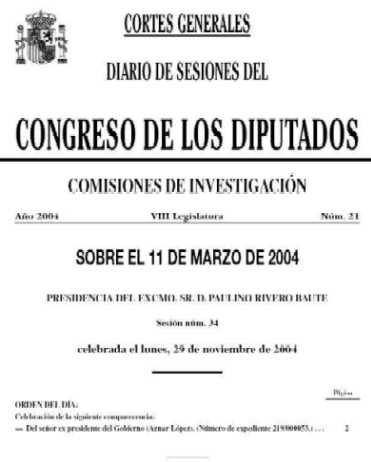 La web del Congreso de los Diputados:
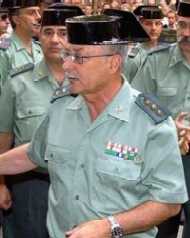 Por fin empiezan a rodar las cabezas de los ineptos que permitieron el 11-M. El primero ha sido el teniente coronel Bolinaga. Un ejemplo del típico funcionario con galones, esa nueva clase de militar, a modo de yuppy con charreteras, que ha proliferado tanto a raíz de de la transición a la democracia. Hombres deseosos de hacer méritos delante del político de turno, servil con el poderoso y engreído con el humilde, que anteponen el triunfo en sus carreras, al servicio a la patria y al propio honor.
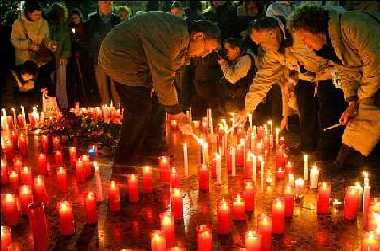 Lo que se trata ahora es de insistir en esta línea y que, pese al cambio de Ejecutivo, ETA pierda esas esperanzas de las que hizo gala en su boletín interno o "Zutabe" del pasado mes de abril Aunque no hay que caer en el triunfalismo, la detención de Mikel Albizu Antza, considerado el máximo dirigente de ETA, y Soledad Iparraguirre, Anboto, junto con otros diecinueve terroristas, es una acción policial que, dada la actual situación de debilidad de la banda, podría ser decisiva para aplastar definitivamente al terrorismo nacionalista.
 No podemos olvidar que esta Comisión en la que ahora parece imprescindible que comparezca Zapatero tenía todas las papeletas para ser cerrada a cal y canto el pasado mes de septiembre El anuncio, inesperado e inopinado, del presidente Zapatero para acudir a declarar a la Comisión de investigación del 11 de marzo significa un giro de gran calado en la estrategia del PSOE. Zapatero, que ha cambiado de opinión -no hay más que rebuscar en la hemeroteca- queda al descubierto. Hasta ahora su guardia pretoriana había desarrollado una amplía red de defensa del Jefe del Ejecutivo. Zapatero había quedado fuera del circuito del 11 de marzo; José Blanco y Alfredo Pérez Rubalcaba se han hartado de explicar que el actual presidente del Gobierno nada tenía que aportar sobre unos días en los que gobernaba el Partido Popular.
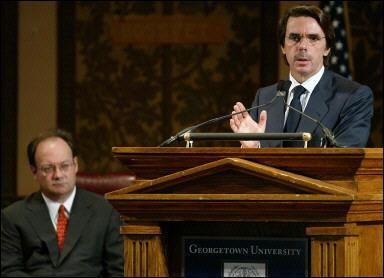 Conferencia de José María Aznar